
The morning mist lingered over the valley, curling around the bare branches like a ghost of winter’s breath. A pale sun fought its way through the haze, casting soft, diffused light over the quiet camp. For the first time in what felt like an eternity, there was no urgency or clamor of imminent danger—only the serene stillness of a world slowly waking up from a long, troubled night.
Caelan sat near the central fire, absently running a whetstone along the edge of his sword. The steady, rhythmic scrape of metal against stone provided a comforting counterpoint to his turbulent thoughts. The embers before him glowed warmly, their gentle heat a welcome relief against the lingering chill. He found solace in the small rituals of routine: the careful tending of his weapon, the quiet appreciation of the fire’s flickering dance, and the whispered promises of a new day.
Across from him, Gavik reclined against a fallen log with an unmistakable air of contentment. His rugged face—etched with years of battle and hardship—was softened by a quiet smile as he watched the sun begin its ascent. The older warrior had returned the previous night after an extended absence. Gavik explained later that an old wound had flared up unexpectedly, forcing him to seek urgent aid in a nearby village. The time away had given him a chance not only to mend physically but also to reflect on the toll of endless conflict. Now, he was back—gruff, wise, and all the stronger for the solitude.
“You should be grateful,” Gavik muttered with a half-smile as he nudged Caelan lightly. “Gives you all a chance to survive without me holding your hands.”
Caelan smirked, his eyes still lost in the embers. “I wouldn’t be here if you weren’t around, Gavik. Your stubbornness—if nothing else—keeps us on our toes.”
A ripple of laughter drifted through the camp as a figure moved quietly between the makeshift tents. Eira, ever vigilant and newly woven into the tapestry of their group, was busy collecting scattered supplies. Her presence had been a welcome addition: the subtle confidence in her eyes and the sharp wit in her words quickly earned her a place among the rebels. Today, she paused near the fire to tidy a small pile of rations and, noticing Gavik’s playful banter, called out with a teasing tone, “You’re lucky I let you have the last of the bread, old man. Otherwise, you’d be hunting for your breakfast in the snow.”
Gavik grunted good-naturedly and reached for the morsel, his eyes twinkling. “I’ll take my chances with starvation,” he replied, prompting a chorus of laughter from those gathered. The moment was simple—a small, shared respite in a life that had long been defined by hardship.
As the morning advanced, the camp gradually stirred into activity. The once-still clearing was now filled with the murmur of conversation, the clatter of utensils, and the occasional burst of laughter. Lysander, the ever-dependable mentor of the group, emerged from his tent carrying a bundle of kindling. He moved with deliberate care, his eyes scanning the faces of the younger rebels as if imparting a silent lesson on the value of each moment.
Over the course of the breakfast, stories were exchanged. Gavik recounted his brief journey to the village—of harsh winter roads, a kind healer who had patched him up, and a moment of quiet reflection amid the chaos of conflict. His tale, though laced with his usual sardonic humor, carried a deeper current: the reminder that even in the midst of war, there were unexpected pockets of kindness and humanity.
Later that day, as the sun climbed higher in the sky, Caelan found himself drawn away from the communal buzz. The responsibilities of leadership weighed on him continuously, and in moments like these, the solitude of nature was his only escape. He wandered away from the central camp toward a small stream that trickled gently through the woods. The water, icy and clear, offered him a moment of clarity. Cupping the cold liquid in his hands, he let it run over his skin, washing away the remnants of sleeplessness and the heaviness of unspoken worries.
At the water’s edge, he paused to watch his own reflection in the gentle ripples. His eyes, dark and thoughtful, held traces of past sorrows and the burdens of the present. The serene sound of the stream and the rustle of nearby leaves combined into a quiet symphony that, for a brief moment, allowed him to forget about battles, losses, and the relentless march of the Duke’s forces.
After a time, he heard footsteps approaching from behind—a measured, purposeful gait that he recognized all too well. Gavik appeared, wiping a stray clump of snow from his broad shoulders, his gaze steady and sincere.
“Mind if I join you?” Gavik asked, his tone gentle, devoid of the usual rough humor.
Caelan nodded. “I could use the company.”
They stood together in comfortable silence, watching the stream flow past. Gavik’s presence was a quiet reassurance, a reminder that even in the harshest times, kinship and understanding could be found in unexpected places. After a long moment, Gavik broke the silence.
“You know, sometimes I think we forget what we’re fighting for in the chaos,” he said slowly. “Not just the freedom or the lands… but moments like these. Simple, quiet moments.”
Caelan regarded him thoughtfully. “I don’t think we ever truly forget, Gavik. It’s just buried beneath all the noise until something—like this—reminds us.”
Gavik nodded, his weathered eyes glinting in the soft light. “I had time to think during my absence. Wounds, both seen and unseen, have a way of making you realize that there’s more to life than battle scars.”
Their conversation drifted like the gentle current of the stream. It was in these moments, far removed from the clamor of war, that Caelan found the strength to hope again—even if only for a while.
Back at the camp, the afternoon unfolded with a sense of calm that bordered on the idyllic. Eira had taken it upon herself to help organize a small project: constructing a more permanent shelter for the younger rebels. With deft hands and a surprisingly soft smile, she guided them in weaving together branches and tarpaulins, creating a space that felt like home, if only temporarily.
Her leadership in this task did not go unnoticed. Lysander watched from a distance, his grizzled features softening as he observed the collaboration. “There’s hope in these simple things,” he remarked to one of the younger recruits. “It’s not all war and sorrow, if you know where to look.”
In the midst of their work, laughter echoed—a sound that had grown rare in recent times. Gavik joined in as he recounted an old hunting mishap, his voice rich with mirth, drawing chuckles from even the most battle-hardened souls. The communal spirit, fostered by shared meals, joint labor, and mutual care, became the bedrock of their resilience.
As dusk began to settle, the camp gathered once more around the central fire. The orange glow of the flames contrasted with the deepening blues of the evening sky, and stars slowly began to twinkle overhead. There was no grand strategy discussed tonight—no talk of the next battle or the next mission. Tonight was simply about being together, of cherishing the fleeting peace.
Caelan found a quiet spot near the edge of the circle and sat down, allowing the warmth of the fire to envelop him. The faces around him—each one marked by their own scars and stories—seemed less like comrades in arms and more like a family bound together by shared hardship and quiet triumphs.
Brenna, who had been uncharacteristically silent since the group had convened, finally spoke in a soft tone. “It’s strange, isn’t it? How a single night of peace can make everything seem… almost normal again.”
Caelan looked over at her, his gaze gentle. “Normal isn’t something we can always hold on to, but these moments—these are the pieces we cling to. They remind us why we fight, why we endure.”
Brenna nodded slowly, eyes fixed on the dancing flames. “I miss the old days sometimes, before everything fell apart. But maybe, just maybe, we can rebuild. One quiet night at a time.”
Her words resonated with Caelan, stirring emotions he had long kept buried. He closed his eyes briefly, recalling the faces of those they had lost and the promises he’d made to protect the survivors. In that shared silence, he found both sorrow and a gentle, steadfast hope.
The night deepened, and one by one, the rebels drifted off to their makeshift shelters. Caelan remained by the fire a while longer, his mind wandering through memories and possibilities. He thought of the battles ahead, of the looming threat of the Duke’s forces, and of the fragile hope that tonight had rekindled.
Gavik, having finished his own quiet reflections, eventually returned and sat down beside Caelan. “You know,” he said quietly, “there’s power in these moments. They’re what remind us that we’re still alive, that we’re still human.”
Caelan opened his eyes and smiled faintly. “And maybe that’s enough to carry us through whatever comes next.”
For a long time, they sat together, watching the fire’s embers drift upward like tiny, burning wishes. The night was calm, the sky overhead vast and unbroken—a canvas of endless possibility. In that quiet unity, the rebels found solace. They were more than a ragtag band of fighters; they were a community, bound by their shared struggles, their losses, and their dreams of a better tomorrow.
As the camp slowly surrendered to the quiet of night, Caelan remained awake. The gentle murmur of the wind through the pines and the soft, rhythmic crackle of the dying fire were his only companions. Around him, his fellow rebels had drifted into sleep—Gavik, with his gruff humor and well-earned exhaustion, had already vanished into his tent, and the others, lost in dreams or silent prayers, were long gone. But Caelan could not find rest. The stillness of the night, far from offering solace, stirred memories he’d long tried to bury.
He shifted away from the fading firelight and settled on a worn log beneath a broad, ancient tree. The sky above was a vast tapestry of dark velvet, spangled with countless stars that shone like distant beacons of hope. In that expanse, Caelan’s thoughts began to wander, carried back to moments both tender and bitter.
Brenna.
Her name echoed in the silent night—a single, piercing chord that reverberated through every fiber of his being. He remembered the sound of her laughter, the light in her eyes when she spoke of dreams beyond the war, and the quiet strength she exuded even in her final, fateful moments. Brenna had been more than a comrade on the battlefield; she had been the one who believed in him when doubt threatened to consume him, the one who dared him to hope even when hope seemed a distant memory.
Caelan’s mind conjured images of her: the way her hair fell softly around her shoulders, the fervor in her voice when she rallied those around her, and the bittersweet warmth of her smile that had once softened the cruelty of the world. Now, her absence was a palpable void—a silent testament to all that had been lost in the relentless tide of war. She could never come back, he knew that, and yet in the solitude of this star-lit night, her memory was as vivid as the fire that had warmed them all.
He closed his eyes, and for a moment, he was transported back to a time when their shared dreams had felt within reach. The laughter they’d shared during stolen moments away from the chaos, the whispered promises of a future free from tyranny, all of it swirled around him like leaves caught in an autumn breeze. Each memory was both a blessing and a curse—a reminder of love and hope, and of the deep, unyielding grief that now resided in his heart.
The chill in the air seemed to echo the cold truth of her absence, yet within that chill, Caelan also found a quiet strength. Brenna’s sacrifice was not in vain; her spirit, her love, and the ideals she had fought for remained imprinted in every action he took. In the stillness, he made a silent vow that as long as he breathed, her memory would be a guiding light, a beacon against the encroaching darkness.
Slowly, he allowed his thoughts to settle, focusing on the soft cadence of the night. The sound of a distant stream, the rustle of the trees as they swayed in the gentle breeze—these were the natural rhythms of a world that, despite its scars, continued to endure. In these quiet moments, Caelan began to understand that peace was not a permanent state, but a fragile interlude—a chance to remember, to mourn, and to gather strength for the battles that lay ahead.
He thought of his comrades, each with their own burdens and memories. Gavik’s hearty resilience, Lysander’s steady wisdom, and even the determined spark in Eira’s eyes—all were threads woven into the fabric of this makeshift family. Together, they had faced unspeakable horrors, and together, they would carry on. Yet as he sat there, alone under the endless sky, Caelan realized that part of his struggle was learning to live with the silence that followed loss.
There was a profound solitude in these moments—one that was both an exile and a sanctuary. The quiet allowed him to confront his innermost fears and hopes. He wondered if Brenna, in her final hours, had felt a similar mixture of pain and peace. Did she, too, find comfort in the stars? Did the beauty of a calm, silent night offer her a fleeting glimpse of the life they had all dreamed of?
These thoughts mingled with the present, forging a resolve that was as raw as it was gentle. Caelan understood that grief was not a weakness to be overcome, but a part of the journey—a necessary passage through which one could learn to embrace hope again. He resolved to honor her memory not by dwelling in sorrow, but by allowing it to shape him into a leader who could find beauty in the midst of darkness.
As the hours passed, the quiet of the night deepened. The fire’s embers finally faded to soft, glowing coals, and even the whispering wind seemed to slow its pace. Caelan remained on his log, lost in reflection, until the first blush of dawn crept over the horizon. In that tender light, the sky shifted from indigo to a gentle wash of pink and gold, as if nature herself was renewing the promise of a new day.
With a deep, steadying breath, Caelan rose. The night had been long and filled with bittersweet recollections, but it had also granted him the clarity to face the coming day. He knew that Brenna could not return, but her legacy would live on in every act of courage, every moment of compassion that he and his comrades shared.
In the quiet transition from night to day, beneath skies that were still and gentle despite the lingering chill, Caelan embraced the fragile peace. It was a reminder that even amidst loss and hardship, there was beauty to be found—in memories, in the silent strength of the human spirit, and in the hope that every new dawn could bring a chance to build something better.
Under the vast expanse of a dawn that still held the deceptive calm of a still sky Caelan clenched his fists and stared into the horizon, his eyes aflame with both sorrow and unbridled fury. Beneath those silent, still skies—so cruelly serene in contrast to his turbulent heart—he remembered every fallen comrade, every stolen smile, every promise broken by the ravages of war. Their memories, each one a sharp, searing shard of his soul, surged through him until grief and rage intertwined like wild, unyielding flames. In that raw, solitary moment, with the indifferent stars his only witnesses, he raised his voice, trembling yet resolute, into the cold, expectant night. “To any god who dares listen,” he vowed, his words laced with the bitter tang of loss and the fierce hope for redemption, “I swear by these still, untroubled skies that I will end this relentless war. I will tear down the darkness that has stolen our future and restore the peace our fallen loved ones dreamed of. No sacrifice shall fade into oblivion, no enemy be spared until every soul lost is avenged and our nation basks once more in the pure light of freedom.”
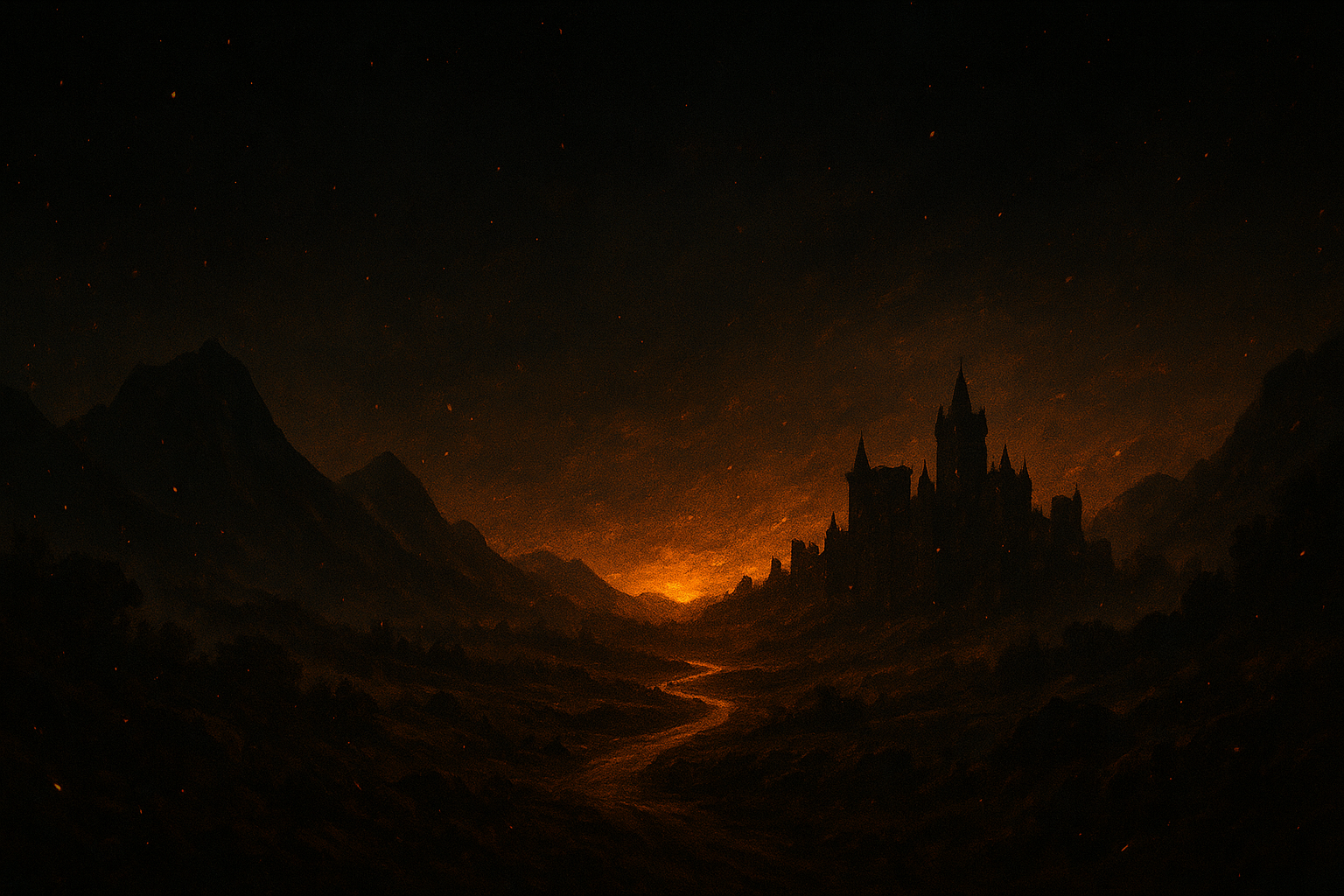
Far from the rebel camp, high upon the cold stone of his fortress, the Duke stood alone on a narrow parapet, his gaze fixed on the endless expanse of night. Beneath the same vast, indifferent sky that had borne witness to Caelan’s impassioned vow, the Duke’s expression remained inscrutable, his eyes dark and unwavering. In the quiet solitude of his elevated perch, he did not speak or ponder aloud—he simply stared at the celestial tapestry above, as if silently contemplating the fate of the nation and the inevitable reckoning that lay ahead.

Leave a Reply